Netflix was about to release more titles in a year than all of Hollywood combined
Netflix was planning to launch around 600 titles in a single year, more than every Hollywood studio was planning that year put together. Every title would release simultaneously in every country, localized into more than 30 languages.
Subtitles sat on the critical path. The existing third-party subtitling tools couldn’t deliver the scale or the quality that slate demanded.
Building a tool in-house meant we could design it from scratch around what linguists actually needed, and drop the setup overhead that came with third-party software.
600 titles in one year, more than every Hollywood studio combined, launching at the same time worldwide in 30+ languages.
Design lead on an enterprise tool for expert users
I led design on the subtitling suite, a web tool used by linguists inside Netflix and by external vendors. I worked across a cross-functional team with product and engineering, and designed for the people who do the work: linguists, language managers, and content execs.
The business saw a scale problem. Linguists felt a workflow problem.
The business problem was straightforward: third-party tools couldn’t support the scale and quality Netflix required.
The customer problem ran underneath it. Linguists spent hours tediously conforming third-party tools to Netflix standards before they could even start translating. Research showed how pervasive this was: translators were posting YouTube videos explaining how to configure the software for Netflix subtitle work.
Because turnaround time was the constraint on the whole launch strategy, my focus was finding the bottlenecks in the linguists’ actual workflow and designing them out.
We already had the seed of the tool
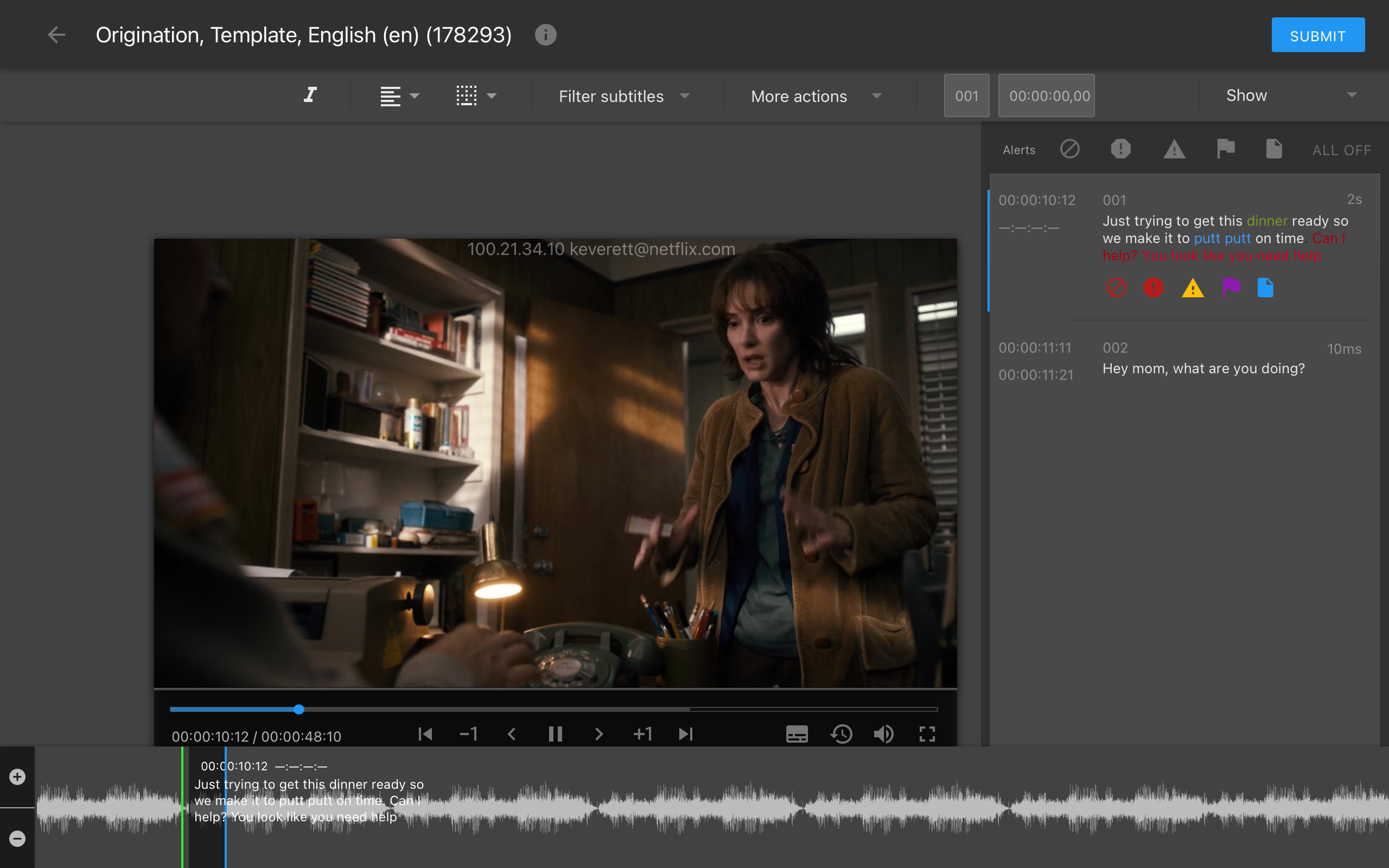
The team already had a tool for authoring English templates. That mattered, because English is the bridge language for subtitling: every subtitle task starts from an English template.
Task: translate Thai content into Spanish. Problem: Thai to Spanish translators are hard to find. Solution: translate Thai to English, then English to Spanish.
Rather than build from a blank slate, the plan was to grow the English template originator into a full subtitling suite.
Three things to optimize for
I focused the work on three outcomes: a better perceived experience, shorter turnaround times, and more accurate translations. Each one targeted a real bottleneck in how linguists worked.
A tool that tells you what changed before you go looking
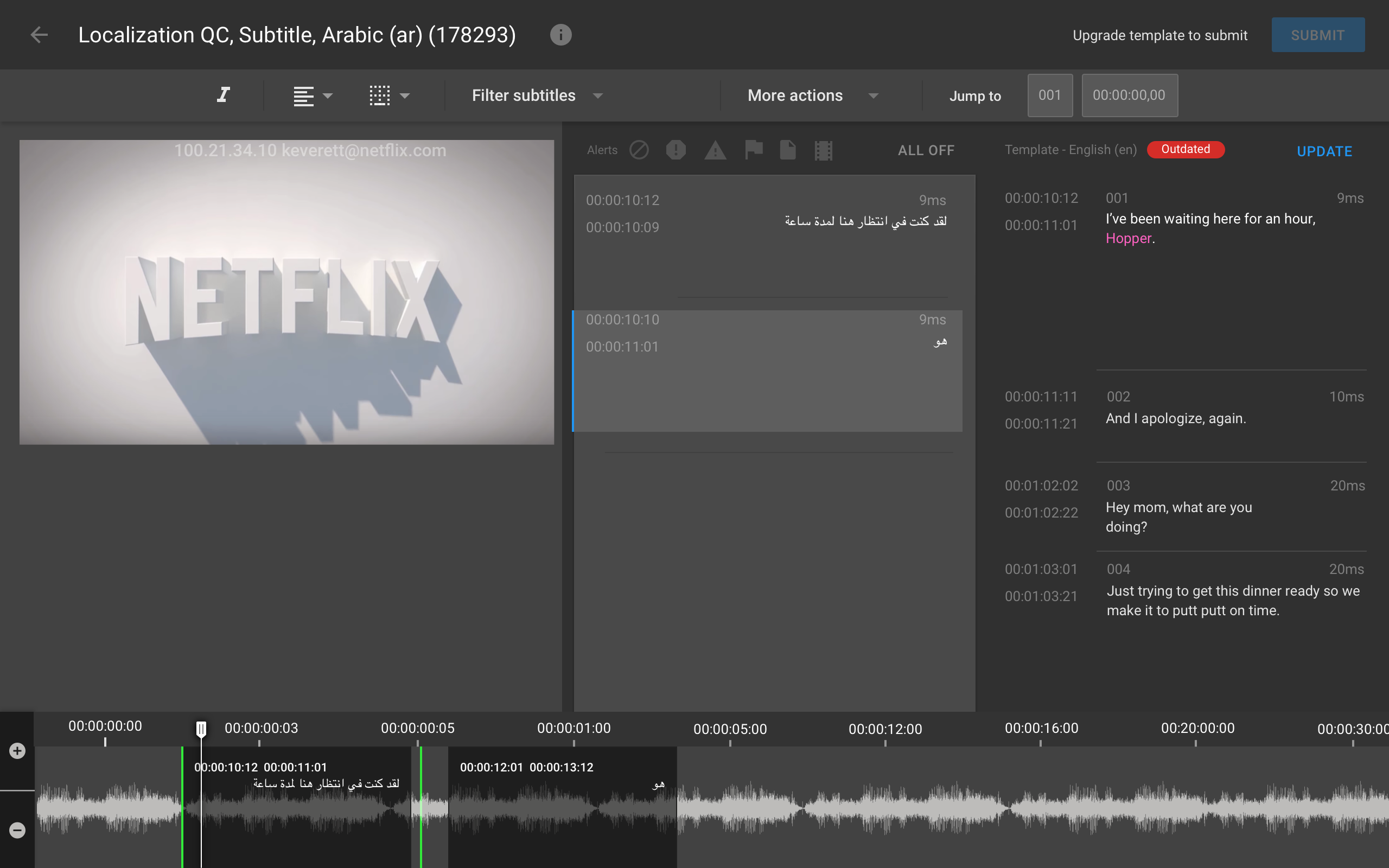
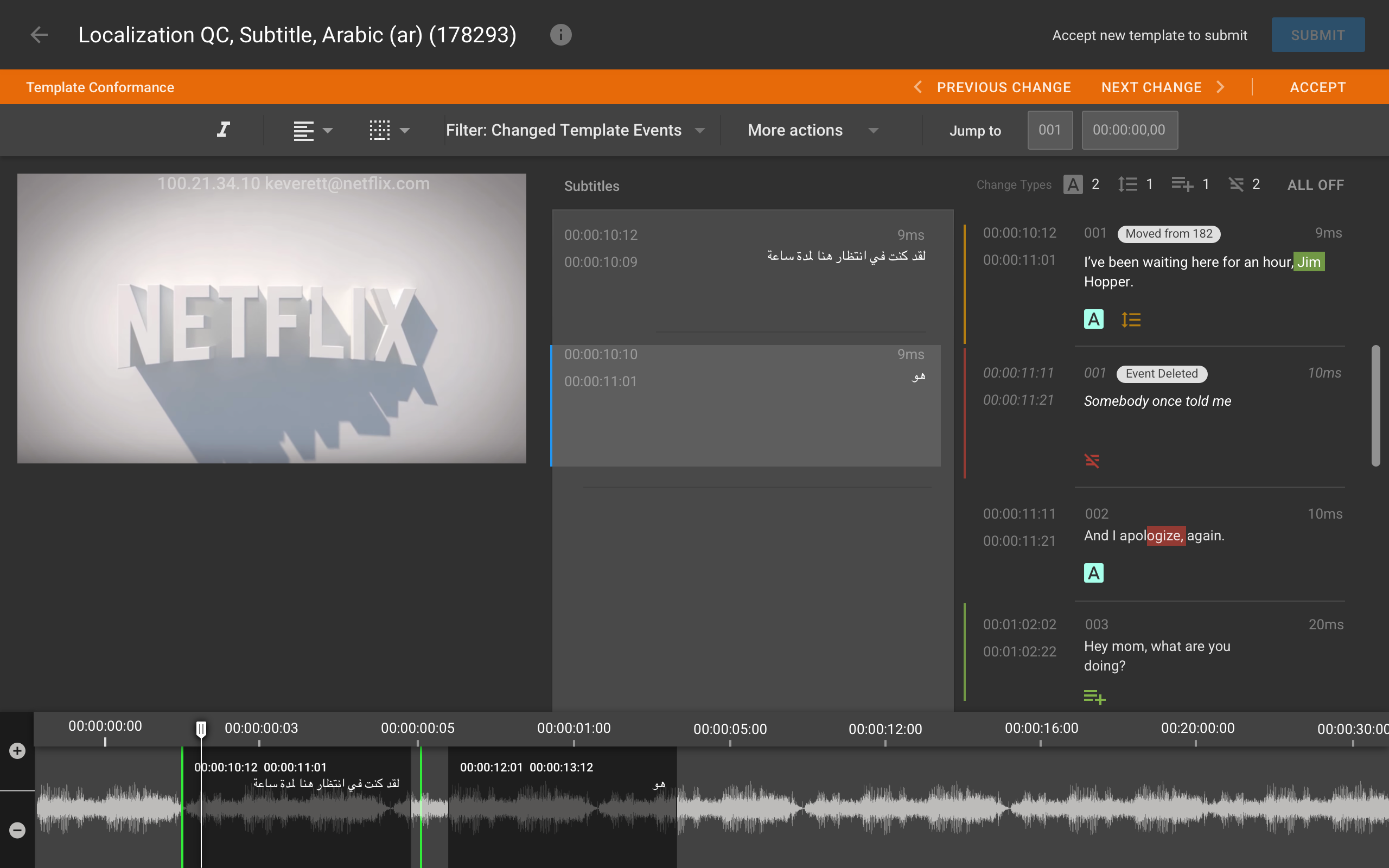
Templates get revised. When a new version of the English template arrived, linguists used to discover the changes the hard way, by rewatching the entire video and spotting the differences manually. I designed a proactive notification that surfaced a new template the moment it landed, and communicated the differences between the new template and the existing subtitles up front.
Alongside it, a pass of visual and interaction improvements made the dense authoring surface easier to read and faster to move through.
Let the tool do the tedious parts
The biggest time sink came before translation even started: the setup and the manual conformance to Netflix standards. I designed automation into the core tasks. Auto-spotting and auto-transcript handled the mechanical timing and transcription work, and the tool handled conformance to Netflix standards instead of leaving it to the linguist.
Put the right name in front of the linguist at the right moment
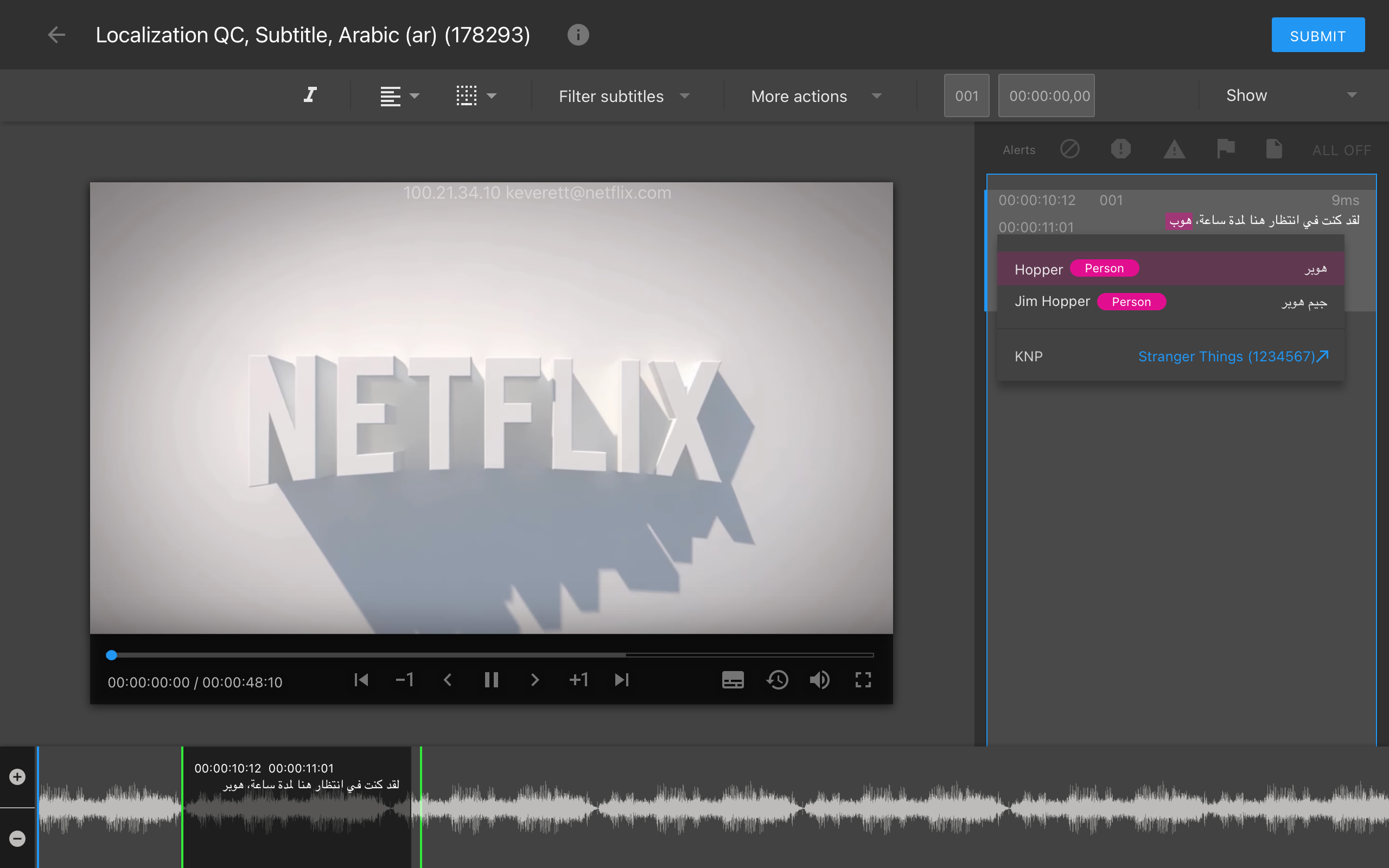
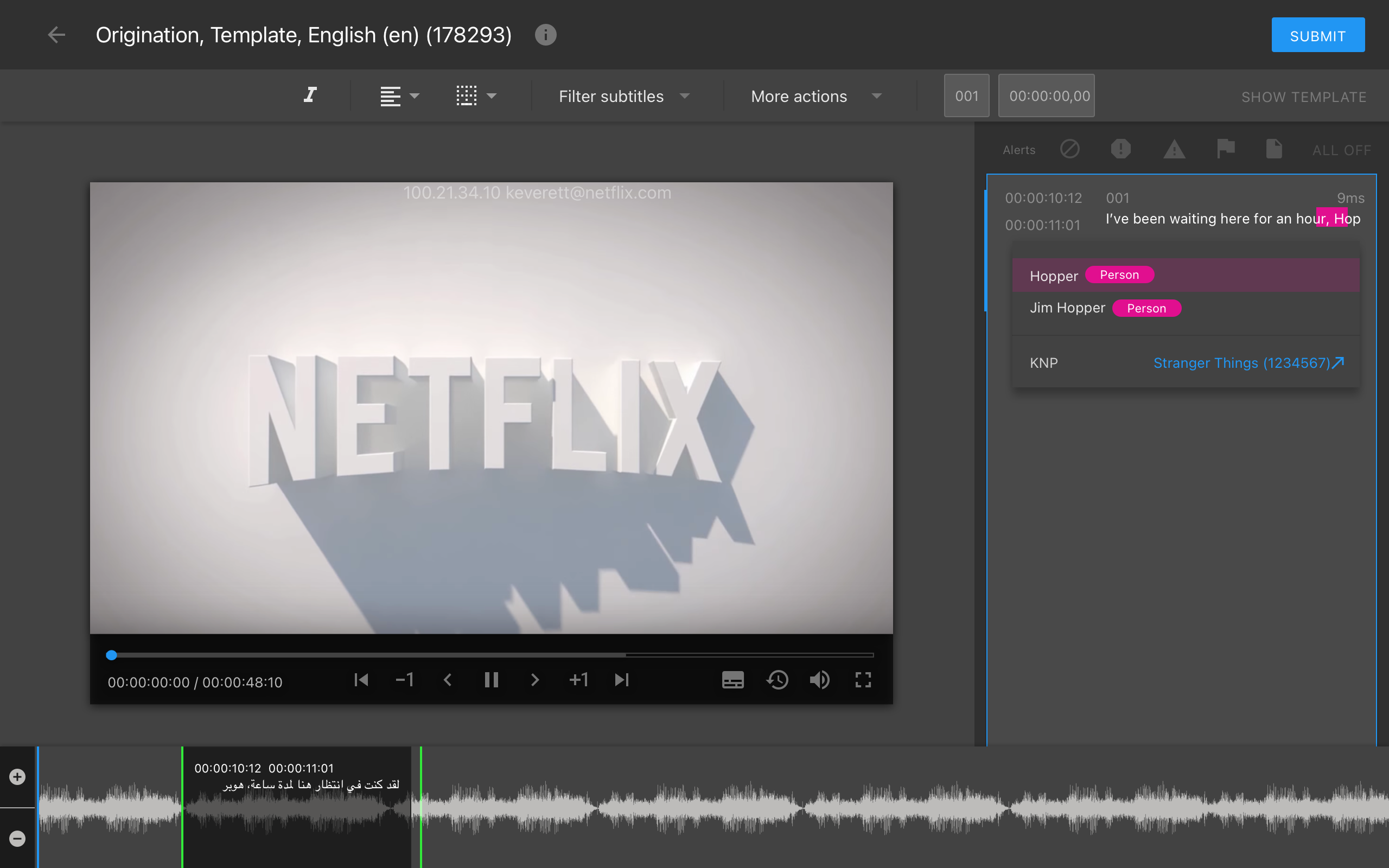
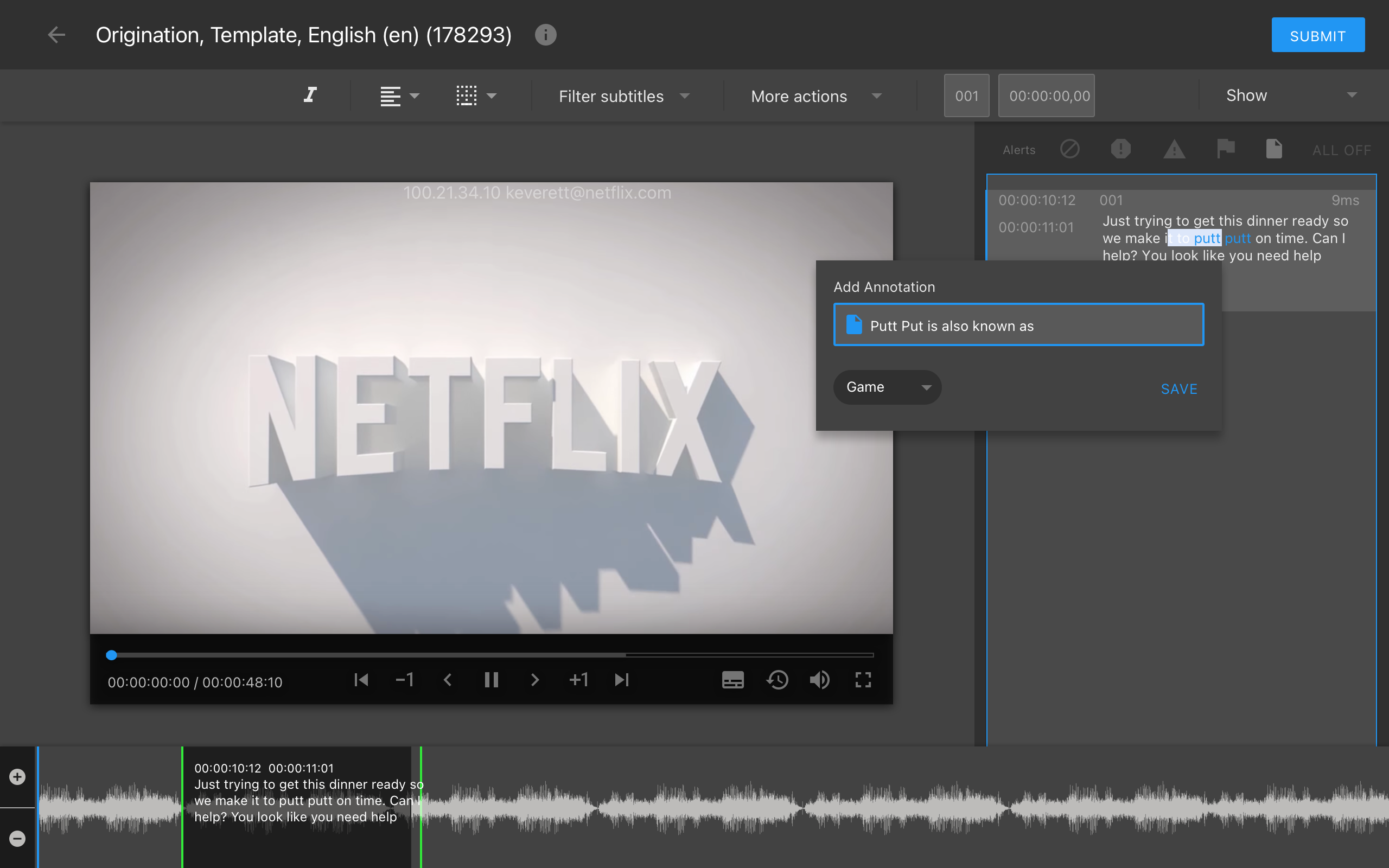
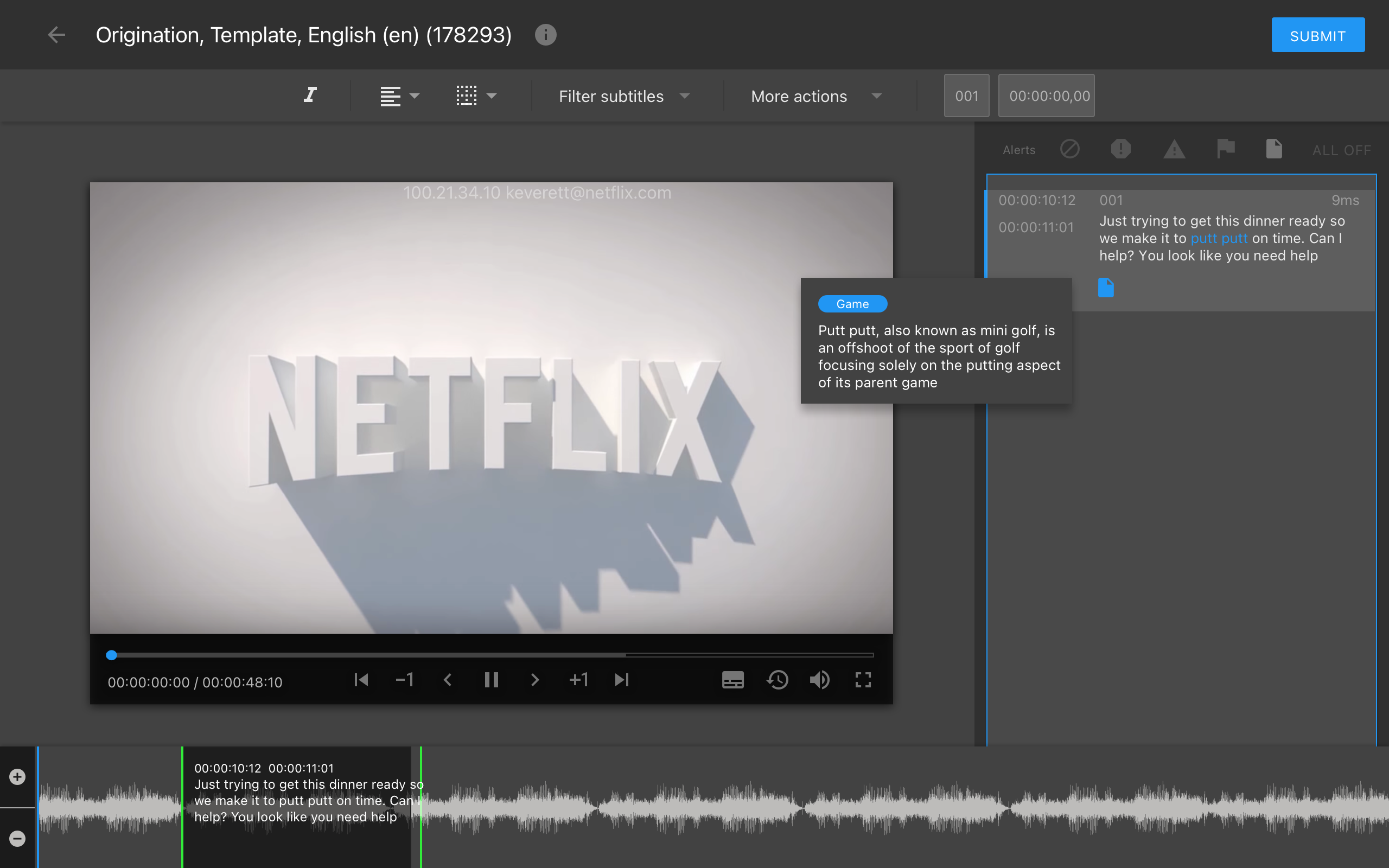
Accuracy often came down to names and recurring phrases. I designed Known Named Phrases (KNP) into the editor: linguists could search KNP directly, and the tool surfaced the right KNP in a contextual menu as they worked. Rich annotations let context travel with the subtitle, so the next person in the chain had what they needed.
From two days to two hours
The suite cut turnaround for a typical 50-minute episode from two days to two hours. That is what made simultaneous global launches viable at the volume the slate required.
The work was later patented as US 10,419,828, “Modifying subtitles to reflect changes to audiovisual programs.”
What this taught me
The highest-leverage move was recognizing that we didn’t need to start over. The English template originator was already the spine of the workflow, and growing it beat building something new.
Designing for expert users at scale rewards removing friction over adding features. What the linguists needed was for the tedious, repeatable parts to disappear, so they could spend their time on judgment.